
If you’ve noticed a sore in your mouth that just won’t heal, how long is too long to wait before having it checked? According to the National Institute of Dental and Craniofacial Research, any sore, irritation, lump, or thick patch that lasts more than two weeks warrants a professional evaluation. Most of the time it turns out to be something benign, like a canker sore or minor irritation, but persistent sores are also one of the most common early signs of oral cancer. That two-week mark is the standard cutoff for scheduling an oral cancer screening.
Key Takeaways
- Any sore in the mouth that hasn’t healed within two weeks should be evaluated professionally.
- The NIDCR lists persistent sores, lumps, and white or red patches among the earliest signs of oral cancer.
- Early-stage oral cancers are often painless, which is why time (not pain) is the main warning signal.
- Risk factors include tobacco use, heavy alcohol use, sun exposure to the lips, and certain strains of HPV.
- Oral cancer screenings are quick, non-invasive, and can be done as part of a routine visit.
Table of contents
- Key Takeaways
- How Long Is Too Long for a Mouth Sore?
- What Does a Concerning Sore in My Mouth Actually Look Like?
- What Other Symptoms Warrant an Oral Cancer Screening?
- What Happens During an Oral Cancer Screening?
- Who Is at Higher Risk?
- Why Time Matters So Much
- Don’t Wait Out a Sore in Your Mouth
- Sources
How Long Is Too Long for a Mouth Sore?
The general medical consensus, echoed by the NIDCR and the American Cancer Society, is that any sore or unusual patch in the mouth lasting more than two weeks should be examined. Canker sores and minor injuries from biting the cheek, eating something sharp, or a rough tooth surface typically heal within seven to ten days. A sore that hasn’t improved in two weeks is behaving differently than a normal mouth injury, and that’s the signal to have it checked, whether or not it hurts.
What Does a Concerning Sore in My Mouth Actually Look Like?
The tricky thing about early oral cancer is that it often looks unremarkable at first. Common early presentations include a small white or red patch, a flat non-healing sore, a rough or slightly raised area, or a thickened patch of tissue. Some sores bleed easily when touched; others do not. A concerning sore may appear on the tongue, the floor of the mouth, the inside of the cheeks, the lips, the gums, or at the back of the throat. Location alone doesn’t rule anything in or out, which is why professional evaluation matters.
What Other Symptoms Warrant an Oral Cancer Screening?
Beyond a persistent sore, the NIDCR lists several additional warning signs worth mentioning at an appointment: a lump or thick patch anywhere in the mouth or throat, a persistent sore throat, hoarseness or a lasting voice change, a lump in the neck, difficulty chewing or swallowing, numbness in the tongue or mouth, or swelling of the jaw that changes how dentures fit. If any of these last more than two weeks, book an evaluation.
What Happens During an Oral Cancer Screening?
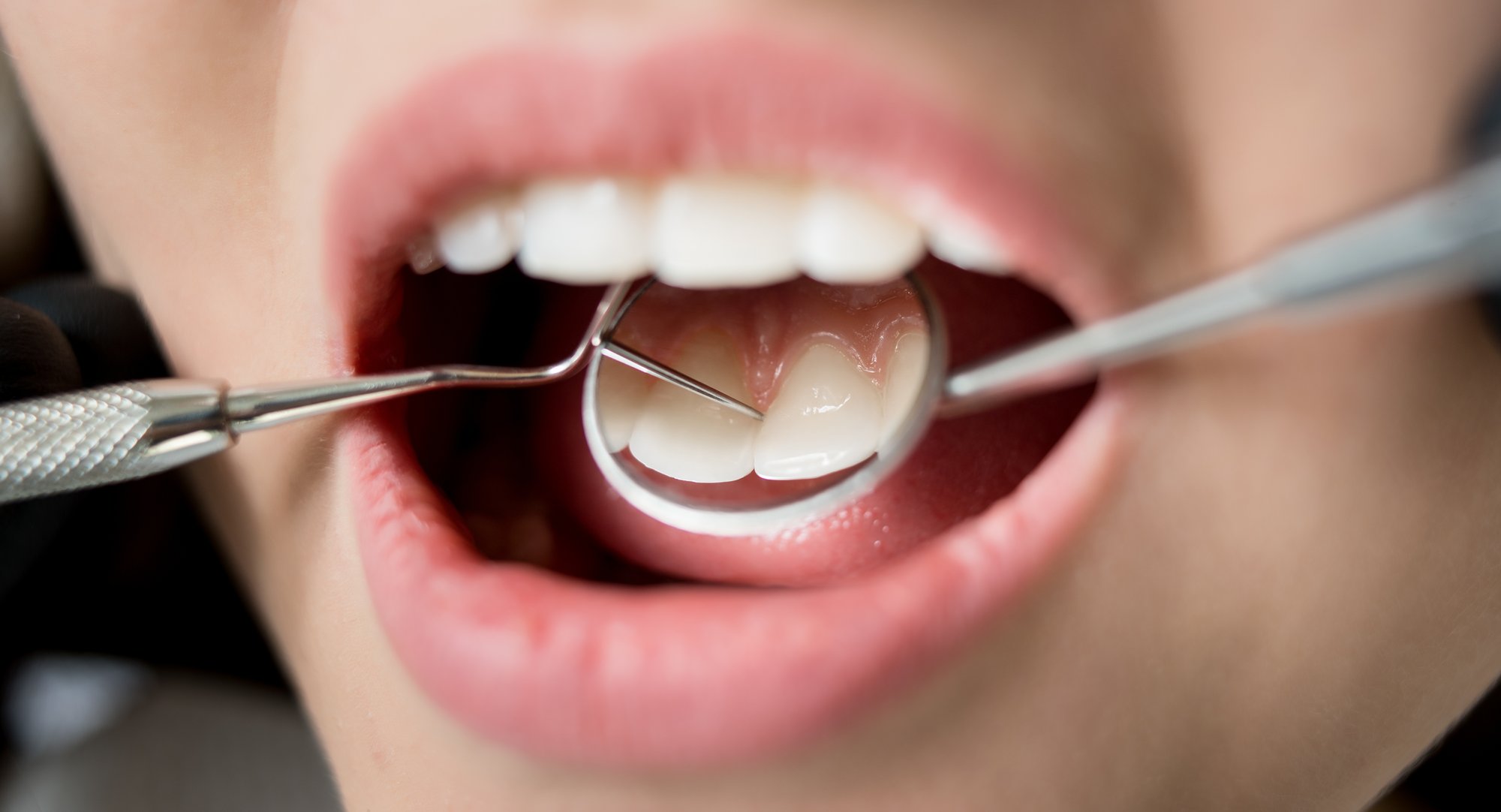
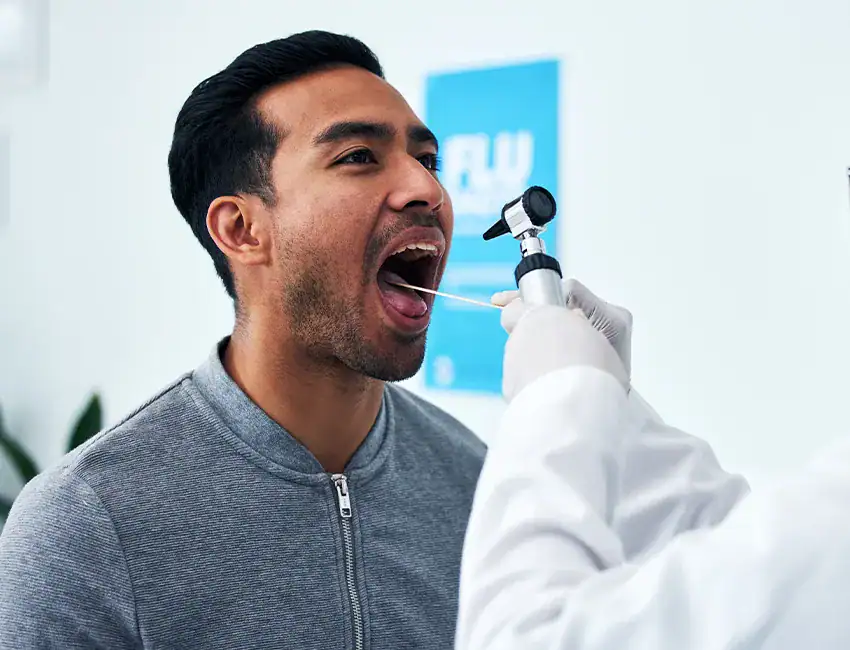
An oral cancer screening is quick, non-invasive, and typically painless. A dental professional visually inspects the tongue, floor of the mouth, inside of the cheeks, roof of the mouth, lips, and back of the throat. Gentle palpation of the neck, jaw, and floor of the mouth checks for lumps or firm areas. If something suspicious is found, the next step is usually a referral for a biopsy, which is the only way to know definitively whether tissue is benign or malignant. Screening can be scheduled on its own or added into any routine periodontal visit.
Who Is at Higher Risk?
The NIDCR identifies several factors that raise oral cancer risk. Tobacco use in any form (cigarettes, cigars, pipes, chewing tobacco) is the most well-established. Heavy alcohol use raises the risk further, particularly when combined with tobacco. Long-term sun exposure to the lips is associated with lip cancer. Infection with certain high-risk strains of human papillomavirus, particularly HPV-16, is a growing cause of oropharyngeal cancers, especially in younger patients without traditional risk factors. A prior diagnosis of oral cancer is itself a risk factor for recurrence.
Why Time Matters So Much
Oral cancer that’s caught early has a significantly higher five-year survival rate than cancer diagnosed after it has spread. Because early-stage oral cancers are often painless, patients typically wait too long to have concerning changes evaluated. A sore in my mouth that persists for more than two weeks is a reason to book an appointment, not a reason to wait and see whether it goes away. Waiting doesn’t help; earlier evaluation does.
Don’t Wait Out a Sore in Your Mouth
A persistent sore is one of the most common ways oral cancers first shows up, and the two-week rule exists because early evaluation has such a dramatic effect on outcomes. Any lasting change in the mouth is worth a professional look, even if it doesn’t hurt.
If you’re concerned about a persistent sore and want to schedule an oral cancer screening in York and Hanover, PA, contact our York or Hanover office or schedule a consultation.
Sources
Content reviewed and approved by Dr. Sourvanos to ensure clinical accuracy and alignment with current evidence-based standards.
National Institute of Dental and Craniofacial Research. (n.d.). Oral Cancer. https://www.nidcr.nih.gov/health-info/oral-cancer
This article is for general education and is not a substitute for a personal evaluation. Every patient’s needs are different.
Questions about your own gum or implant health?
Schedule a consultation with Dr. Sourvanos in York or Hanover.